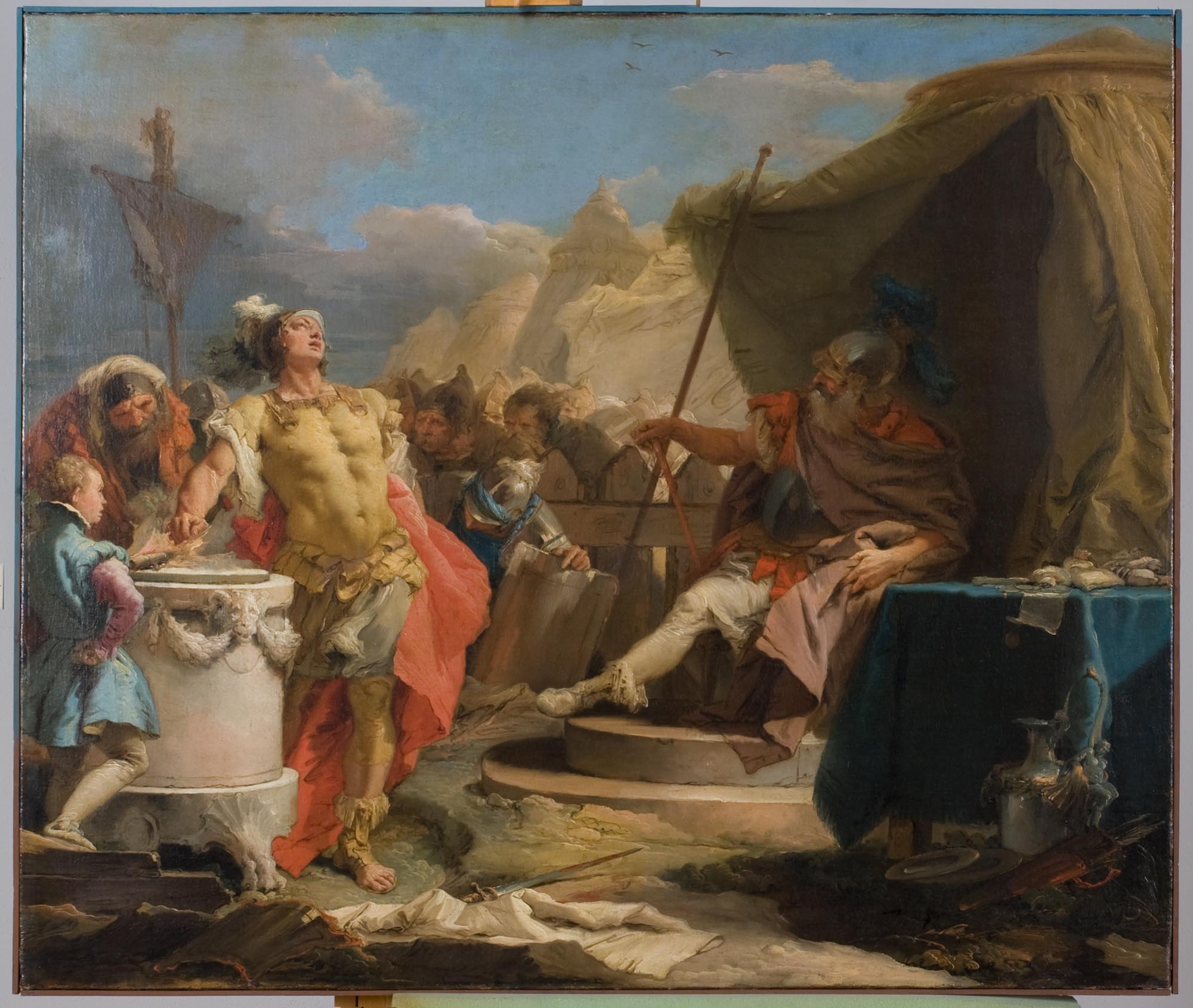



Formerly having belonged to Tiepolo and his descendants, the artist’s two companion pieces (F82 and F83), which had been commissioned by Balthasar Neumann, changed hands in 1834 and were given to the MvW Museum. Both of the legendary scenes are set during the earliest period of Roman history. Originally recorded by the Roman historian Titus Livius, the events have been skilfully brought to life in Tiepolo’s painting.
With an exaggerated pathos rivalling that of a melodramatic actor, Gaius Mucius, who earlier that day had snuck into his enemy’s camp with the intent to kill Porsenna, thrusts his hand into the fire – a consequence of his failure to successfully invade the camp, which ends with him being brought before the Etruscan ruler. To demonstrate his bravery, Mucius sticks his hand into the fire (and inspires a phrase that Germans use to this day when they want to say that they’d ‘stake their life on something’). The king is so impressed by Mucius determination and bravery that he lets Mucius go and agrees to a truce with the Romans.
The blues, reds, and yellows contrast with the duller and more subdued colours of the surroundings, enhancing the theatrical and dramatic spirit of the scene. Attracting the attention of everyone, Mucius seems to call on the gods as witnesses of his courage. This staging of the gaze is typical of Tiepolo and becomes even more apparent when considering the visual relations of this painting’s companion piece.